

话梅糖《乌玛》|中非写作大赛获奖作品
CASIN
由上海中非关系研究网络(CASIN)举办的第一届全球中非写作大赛(The First Global China-Africa Writing Competition)于2024年11月在复旦大学举办的“跨国史视野下的非洲左翼思潮与运动”国际研讨会上正式落下帷幕。本次大赛由上海交通大学的施东来老师策划统筹,并获得复旦大学孙遇洲老师带领的CASIN团队的倾力支持。
本届大赛评委团由程莹(北京大学)、张勇(浙江大学)、袁明清(埃尔朗根-纽伦堡大学)和Ignatius Suglo(里士满大学)四位老师组成。评委们经过一个月的认真审稿筛选,共决选出了五位获奖者,其中非虚构类一等奖一名,虚构类一等奖一名,虚构类二等奖两名,虚构类荣誉奖一名。
下面刊出的是本次大赛非虚构类一等奖作品,话梅糖《乌玛》的英文版。该文写作原文为中文,首发于单读公众号,CASIN转发刊出(点此阅读),英文版由作者本人翻译,施东来老师校对,首发于本次大赛非洲宣发合作方The Elephant(见“阅读原文”)。
张勇博士的评语
Praises by Dr. Yong Zhang
《乌玛》以细腻且层次分明的叙事手法探讨了跨文化沟通、身份认同与人性共鸣的主题。作者巧妙地透过主人公在尼日利亚的工作生活,将个体身份在多元文化碰撞中的困惑与求索描绘得淋漓尽致。不同种族、文化背景的人物相遇、互动与彼此了解的过程,映射出当今全球化背景下的复杂人际关系,颇具现实性意义。故事在构建中非视角交融的同时,不断引发对偏见与误解的深层思考,将乌玛这一角色塑造得生动而饱满,使其不再是“他者”的象征,而是一个有着愤怒、困惑、喜悦的“具体的人”。
“Oma” explores the themes of cross-cultural communication, identity and human empathy in a subtle and layered narrative. Through the main character's working life in Nigeria, the author skillfully depicts the confusion around and quest for individual identity in the midst of multicultural collision. The process of meeting, interacting and getting to know each other by characters of different races and cultures maps out the complexity of interpersonal relationships in the context of globalization today, which is of great relevance. Mixing Chinese and African perspectives, the story constantly provokes deeper thoughts on prejudice and misunderstanding and portrays the eponymous character in a vivid and well-rounded manner, so that she is no longer a symbol of “the other”, but a “concrete person” with an array of emotions like anger, confusion, and joy.
Oma
by Huameitang
This is generated by The Elephant
via Trinity Audio
When Oma asked me what "Xiao Hei" meant, I must admit—I felt guilty.
1
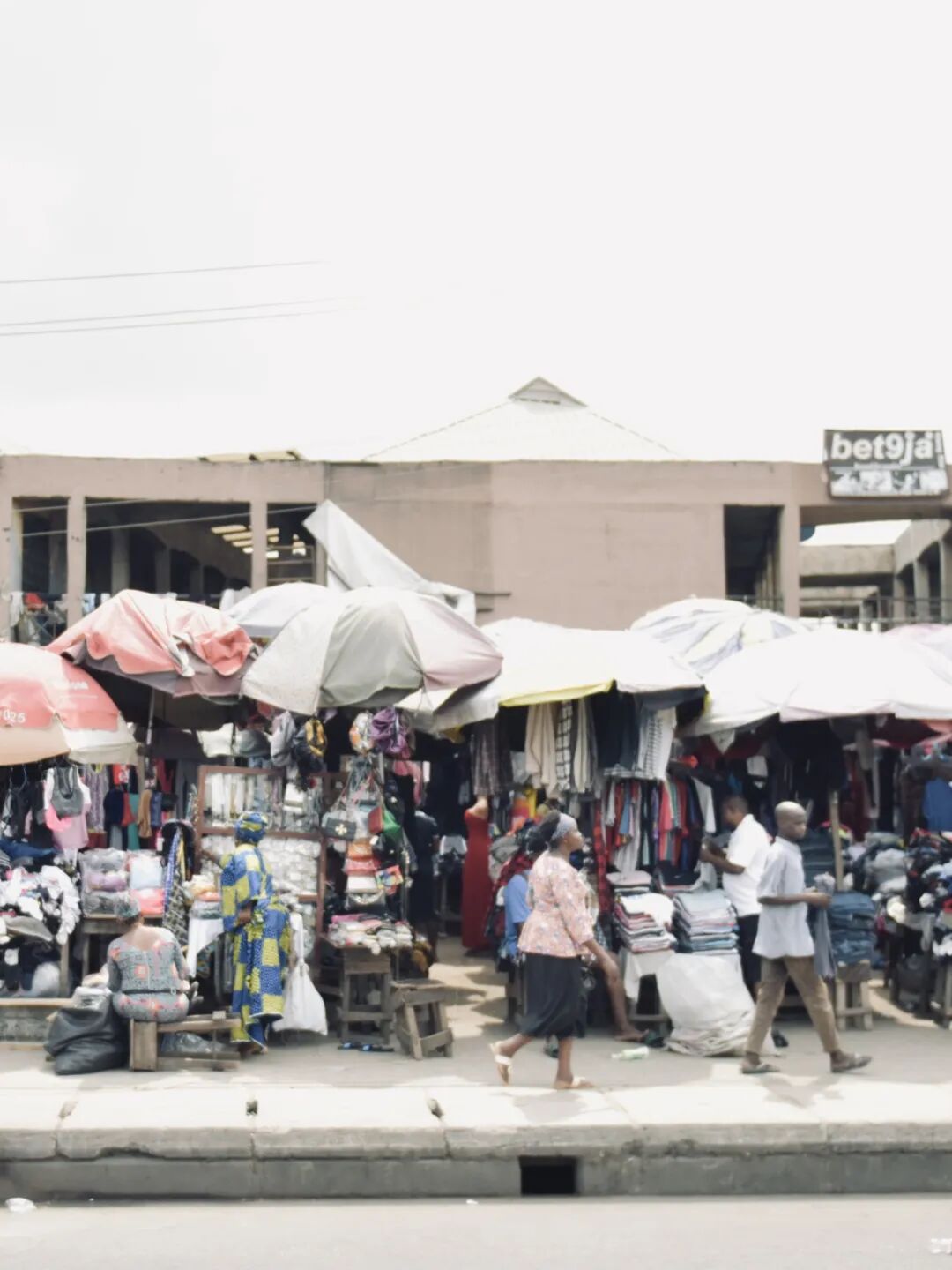
I was interning at a large Chinese enterprise operating in Africa. Most of my colleagues were Chinese, but if you were to calculate the exact percentage, it would be hard to say. That’s because many jobs such as drivers, security guards, janitors, receptionists were done by Nigerians. Oma was one of the few local employees I knew who held a relatively important position—she worked as a translator for the company.
I met Oma at a casting session during my business trip to the regional office. We were filming a short promotional video for the company, and we needed a female lead who could speak Chinese. My Chinese colleague arranged for two candidates: Oma and another girl, Hope. I was to decide who was more suitable for the role.
Oma and Hope were vastly different in both appearance and personality. Hope was petite, Hope was petite, with long braided hair.. Perhaps because she had studied in China, she was more confident speaking Chinese with me. Oma, on the other hand, was taller—about 5 feet 7 inches, with a darker complexion. She wore a sleek, shoulder-length wig and was more reserved, always adding, “My Chinese isn’t very good,” whenever she spoke.
Obviously, Hope was initially chosen as the lead role. But somehow, when it came to the actual rehearsals, she would get nervous and freeze up, unable to deliver her lines. In the end, Oma’s performance turned out to be more natural and relaxed in front of the camera. That's how I started working more closely with Oma, and through our interactions during breaks, we got to know each other better.
On the first day of filming, we worked non-stop until two o’clock in the afternoon. A colleague warmly invited me to a meal at the canteen within the project's construction site, thanking me for promoting the project. I naturally assumed the whole film crew was invited and was just about to ask Oma to join me.
Noticing this, my colleague hesitated and quickly said, "The gathering is for Chinese employees."
Oma heard and understood she wasn’t included, but she pretended not to and quietly got into the car back to the dorm.

2
Life in Nigeria was, in many ways, far easier than I had imagined. The company provided weekly living supplies, I had a luxurious dorm with a private balcony, and the canteen served such delicious Chinese food that I easily gained ten pounds. Transportation was taken care of—drivers shuttled us everywhere, and in less secure areas, armed escorts were provided. Compared to my struggling intern life in Beijing—renting a tiny apartment and barely making ends meet—it felt almost indulgent.
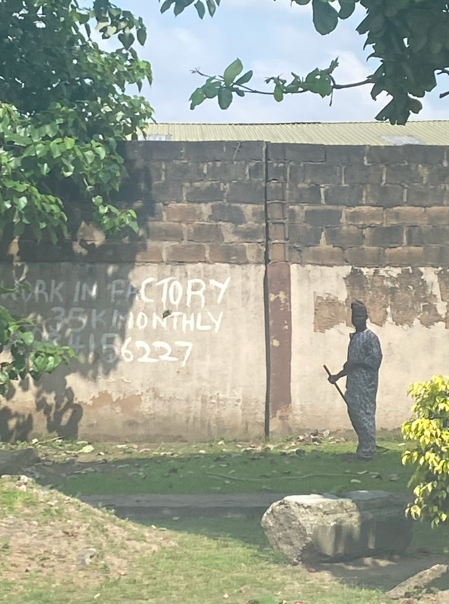
But there were still moments when work and emotions overwhelmed me. I remember one time, sitting in a car, watching the roadside scenes pass by: Nigerians sprawled on the grass, supporting their heads with their hands, motionless under the scorching sun; others perched on utility poles, staring blankly at the sky; some sat on tree roots or stone blocks.
I couldn’t see their eyes, but I felt they were like me.
Gripping the car’s grab handle tightly, I leaned against the window as the vehicle jolted along the road. I wanted to meet their gaze and ask: What are you thinking about? Do you ever contemplate the vastness of the universe and the emptiness of life? Or is it just the immediate pain and confusion, the kind of sorrow that makes you want to tear everything apart?
But I knew it wasn’t the same, because I was inside the car, while they were touching the earth.

3
Oma and I are of the same age, both born in 1998. She is Igbo and Christian. Her parents are university teachers - quite a decent job in Nigeria considering the high unemployment rate. She has four younger sisters and often posts pictures of them on her Instagram and WeChat Moments. When we were together, she would tell me how beautiful they are, but she rarely took pictures of herself.
Our happiest moments were when we sneaked out during filming breaks to buy mint chocolate ice cream. Sometimes, I would visit her dorm, a tiny room filled with the scent of Jollof rice, where we would practice the local language together.
We would talk about our unresolved inferiority complex, the pressures of marriage expectations that we were slowly breaking free from, and our dreams of traveling the world. I was amazed to discover that, despite differences in nationality, race, and ethnicity, as women we shared so many similar struggles, doubts, and outlooks about life.
Interestingly, as a former Chinese language student at the Confucius Institute, Oma’s real passion was Korean dramas—she could talk endlessly about K-pop culture. When I asked her, “What’s the first thing that comes to mind when you think of China?” she hesitated, unable to answer.
Oma also introduced me to Lanlan—the only Chinese child in the whole company who came to Nigeria as a family member. Six years old with big eyes, dimples, and a sweet smile, she spoke with an adorable Hunanese accent. Since Oma could speak Chinese, Lanlan always liked to play with her. Her mum and dad were happy see that, and they appreciated the fact that someone could take care of her when they were working.
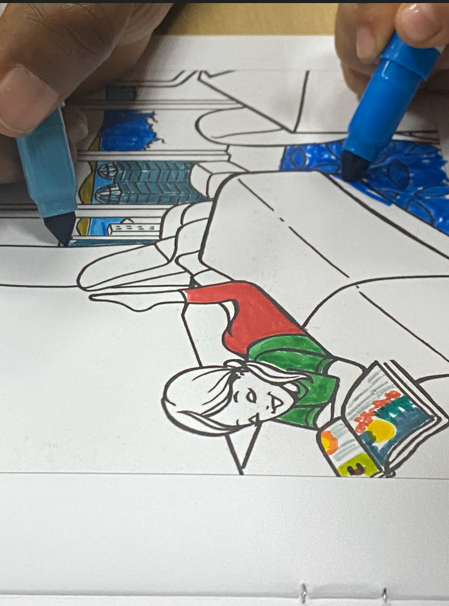
During this business trip, the three of us—Oma, Lanlan, and I—would often take evening strolls in the compound after work, then squeeze together at a desk to play coloring games.
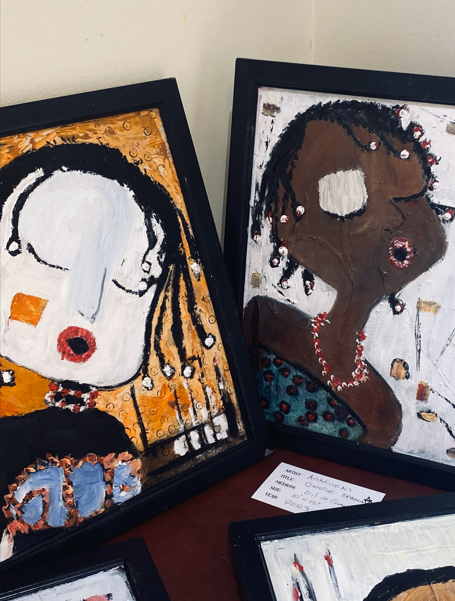
Three figures—different skin tones, different builds—laughing together. We became a unique sight in the compound.
4
After returning to headquarters, Oma and I chatted on WeChat almost every day, mostly about Nigerian customs and current affairs.
Then one day, she sent me a message:
—"Do you know what ‘Xiao Hei’ means?"
(note: literally “little black” or “Blackie” in Chinese)
I felt a sudden panic, worried that someone might be reading over my shoulder. It was as if I could see her eyes through the screen—detached, weary, and quietly accusing, making me feel utterly ashamed.
—"Don't take it to heart. They probably don’t mean any harm. It’s like how Chinese people call foreigners ‘Lao Wai’."
It was more like convincing myself than convincing her.
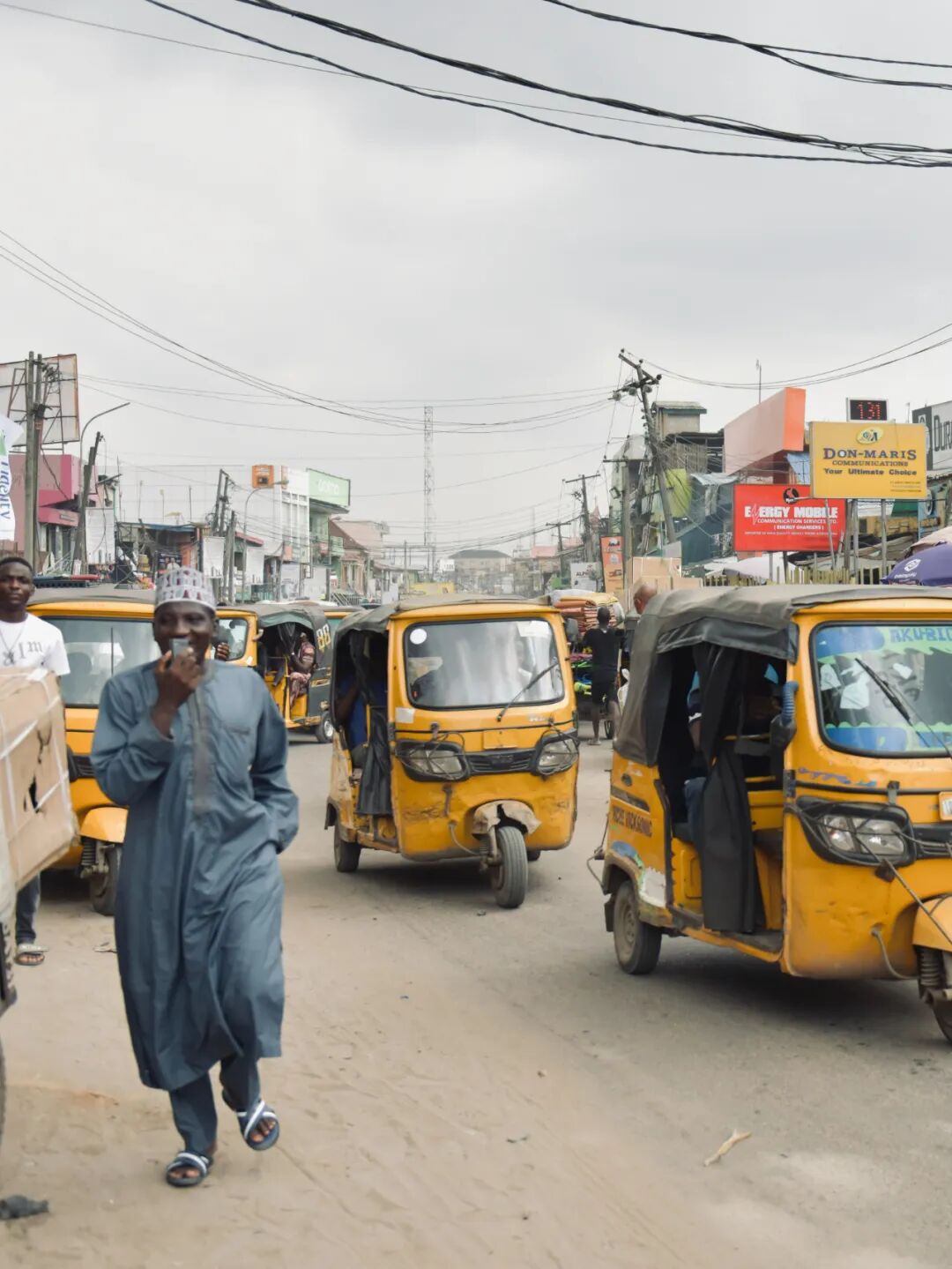
The phrase Xiao Hei was as common in daily work conversations as the words "let’s grab something to eat."
"Just let Xiao Hei fix it."
"Go tell the director and ask some Xiao Hei to come and help."
"Why isn’t that Xiao Hei here yet?"
I had never used the term myself, and it always made me uncomfortable. But any impulse to question it would quickly fade, buried under the weight of workplace etiquette and social norms.
I thought of her and Lanlan again.
On Christmas Eve, the compound was lit with colorful fairy lights. Lanlan, full of excitement, ran and jumped, reaching for the decorations. Oma watched her, smiling, then turned to answer a question I asked her seconds ago.
"Because we’re both lonely."
That was why they became friends.
But later, I came to understand—the real reason they bonded was that, from the very beginning, worldly labels were never a thing between them.
Oma was not just "Xiao Hei", as my colleagues called her.
Nor was she merely a window through which I glimpsed Nigeria.
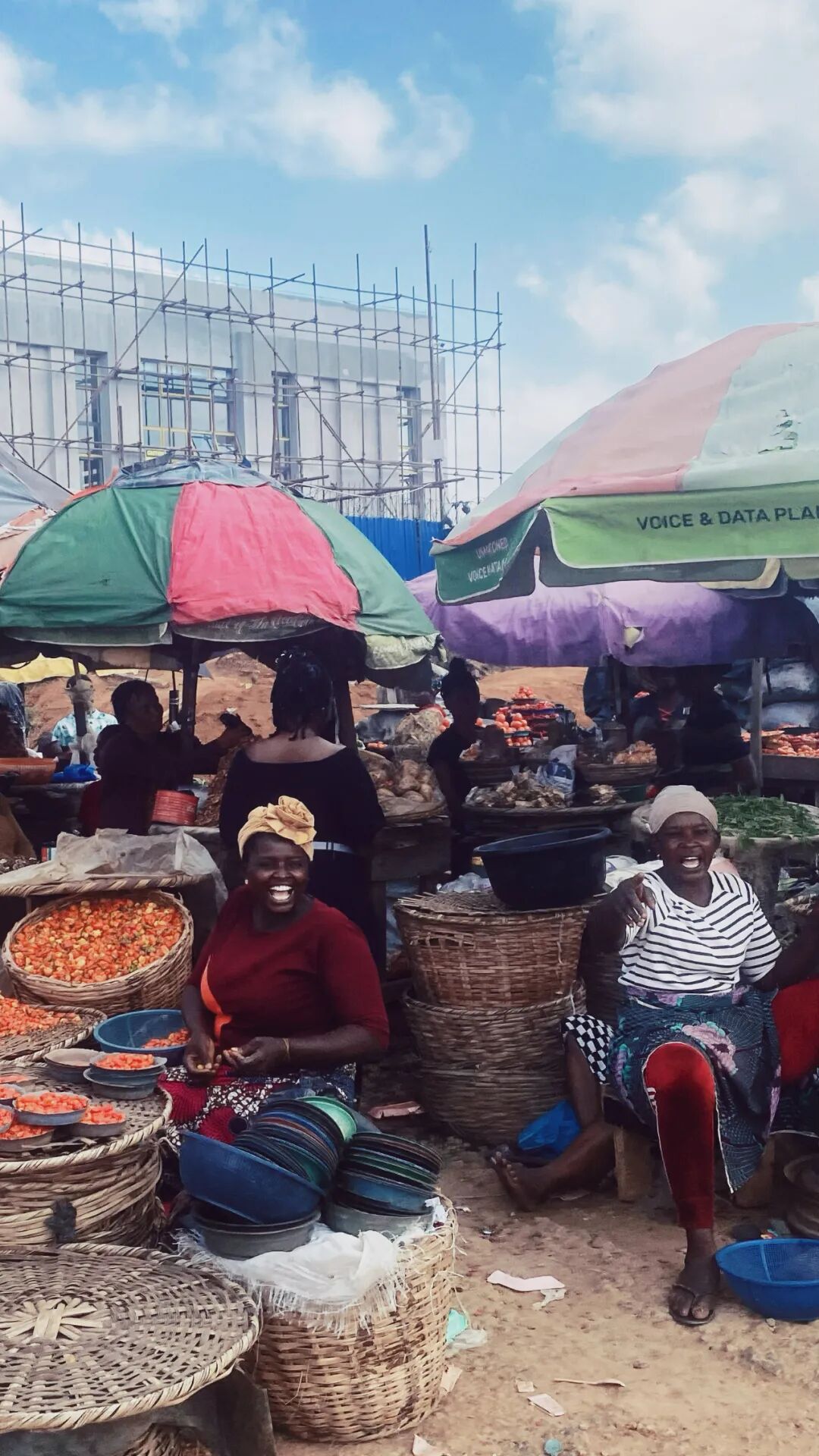
She is an ordinary person with anger, sadness, confusion and joy. A concrete person.
作者简介
About the Author
话梅糖,人道主义援助工作者、年更公众号博主。热衷于实地考察文化多样性,喜欢具体的人。
邮箱:huangmanting1026@163.com
Huameitang, a humanitarian aid worker and sporadic blogger. She is passionate about exploring cultural diversity firsthand and secondhand.
(Contact: huangmanting1026@163.com)
【本文插图均由作者本人提供】
欢迎点击下方合集阅读往期作品
欢迎点击“阅读原文”前往The Elephant网站
撰文:话梅糖
校对&编辑:施东来
排版:任睿欢 袁子龙
本文首发于 CASIN 微信公众平台。
查看原文 ↗