

Award Announcement|The Second Global China-Africa Writing Competition
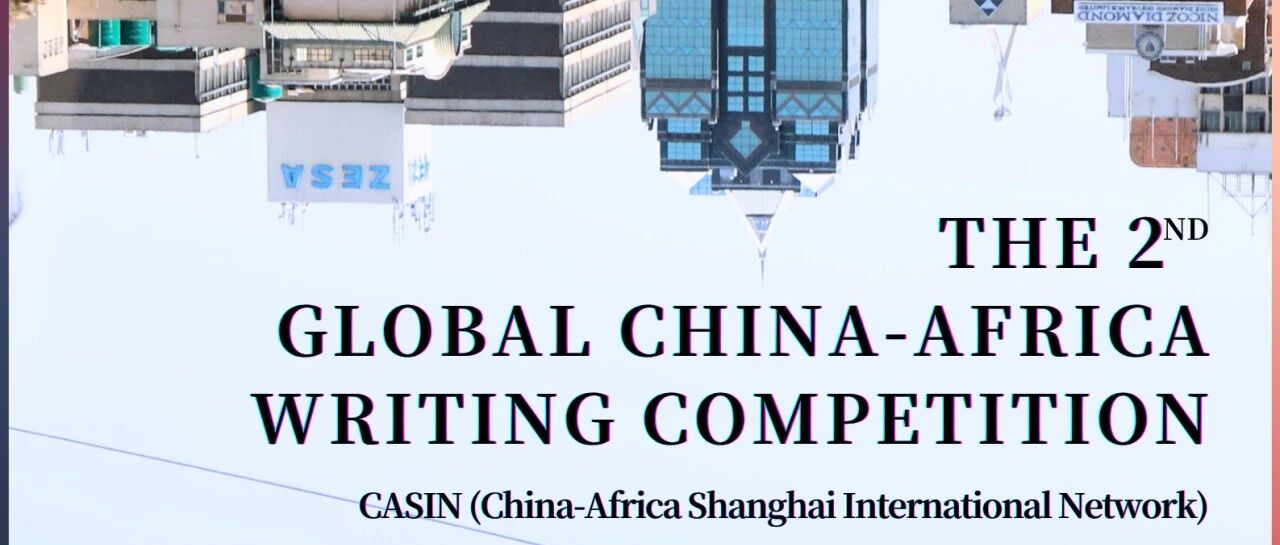
CASIN
On the 31st of May 2026, the Second Global China-Africa Writing Competition, organized by CASIN (China-Africa Shanghai International Network), officially concluded with an award ceremony during the academic event series entitled “China-Africa Relations at 70: Knowledge, Culture, and Global Partnerships”. The series was co-hosted by CASIN together with the School of International Studies, University of Nottingham Ningbo China, the Department of History, Fudan University, and Sino-Africa Hub (Shanghai).
This competition was planned and coordinated by Dr. Flair Donglai Shi (School of Humanities, Shanghai Jiao Tong University), with unwavering support from the CASIN team led by Dr. Jodie Yuzhou Sun (Department of History, Fudan University) and the staff of Sino-Africa Hub. Mr. Leo Liu, leaderof the China–Zimbabwe Exchange Center and Sino-Africa Hub, delivered a welcome speech at the award ceremony and acknowledged CASIN’s continued contribution to promoting people-to-people and cultural exchanges between China and Africa.
Competition Manager Flair Introducing the Competition
“The Global China-Africa Writing Competition” is held biennially as CASIN’s flagship event, aiming to stimulate organic interactions and exchanges between academia and the public, and between knowledge production and cultural production. Its planning began in late 2022, at the start of CASIN’s establishment. In November 2024, the award ceremony for The First Global China-Africa Writing Competition was held at Fudan University as one of the highlight events of the international symposium “The African Left: Theories and Practices”. The excellent works that emerged from the competition were subsequently published by CASIN on our official WeChat platform and by our African collaborator, The Elephant (Kenya), and received positive feedback from readers worldwide, further spreading the event's international influence.
Building on the global vision of the first competition, the second competition went through multiple stages of preparation and development, including the initial call for submissions in July 2025, a second round of submissions in January 2026, the submission deadline on May 1, 2026, and a rigorous review process through the entire month, before successfully concluding at the end of May 2026.
Rooted in a commitment to humanistic concern, the competition encourages creative minds from around the world to explore the cultural and interpersonal dimensions of China-Africa relations through short-form works of fiction or non-fiction (1,000–10,000 characters for Chinese submissions, and 1,000–10,000 words for English submissions). It seeks to offer new literary perspectives onthe diverse interactions and friendships between Chinese and African peoples.
As the organizer, we believe that short-form writing enables more people with local, lived experience to participate in public discussions on China-Africa-related issues, while injecting fresh vitality into the current development of China-Africa storytelling, which is still largely dominated by long-form monographs, especially novels and travelogues.
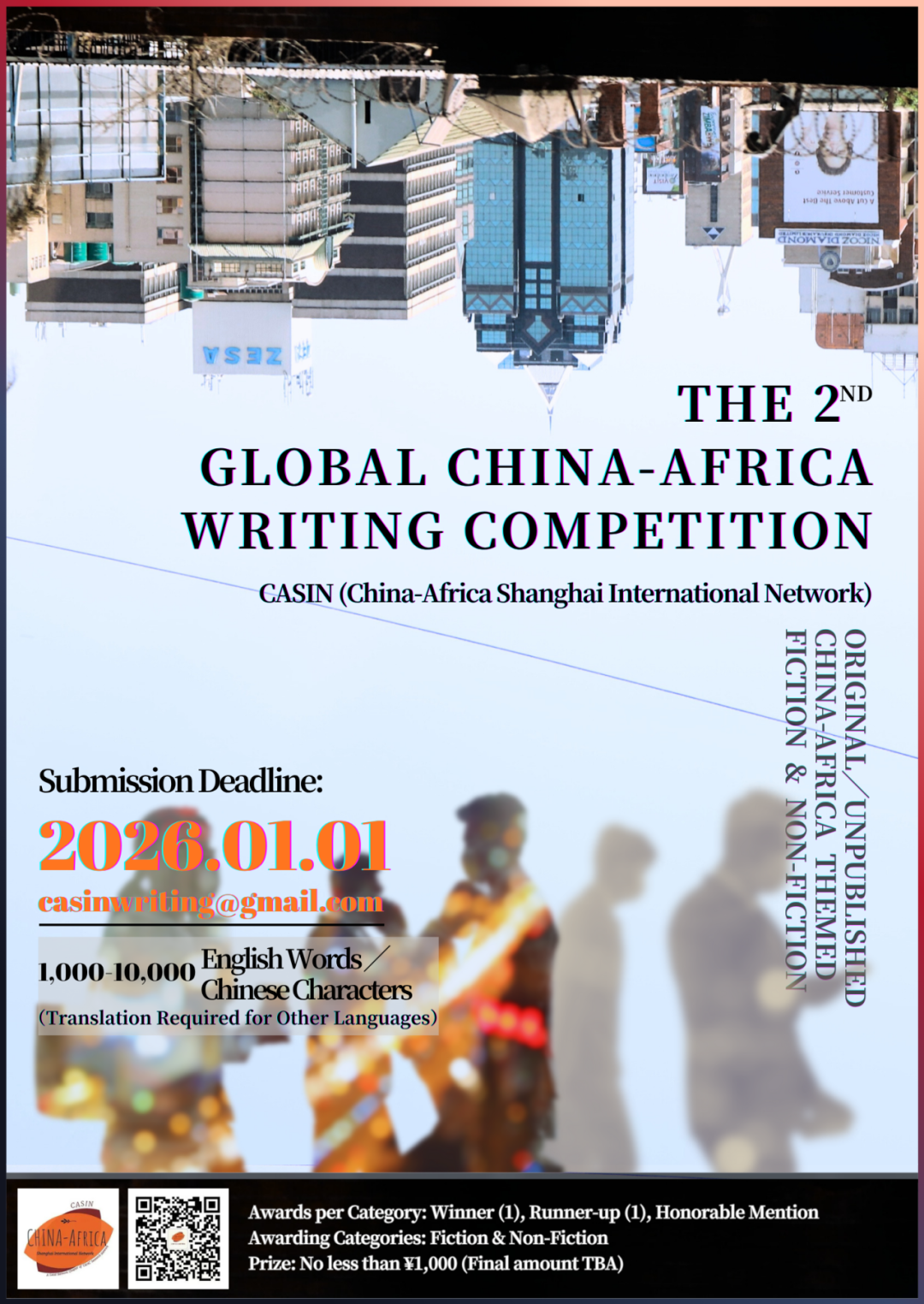
The Poster for The Second Competition
The Second Competition received more than forty submissions in total. Among them, over thirty entries were submitted in the fiction category, with works written in Chinese by authors from China and works written in English by authors from Africa and other regions accounting for roughly equal proportions. The non-fiction category received around ten submissions, the vast majority of which were written in either Chinese or English by Chinese authors who had studied, lived, or conducted long-term fieldwork abroad. Contributors were based in a wide range of locations, including Chad, Cape Verde, Rwanda, Kenya, Nigeria, Tanzania, Namibia, Uganda, Morocco, Comoros, Sierra Leone, Cameroon, Ghana, the United States, Portugal, Austria, and China.
In addition to African international students in China, African writers from the continent who are interested in China-Africa relations, and Chinese authors with work and life experience in Africa, all of who mactively participated in submissions in 2023 and 2024, this edition of the competition also attracted a significant number of contributors working and studying at universities in Europe and the United States, as well as students from various disciplines who have taken courses related to China-Africa studies in different countries. This enthusiasm from the academic community is due to the positive influence of the publication and publicity of the works from the First Competition. Looking ahead, we are committed to expanding the competition’s dissemination channels so that its outcomes and vision can reach broader audiences across more countries, regions, fields, and industries.
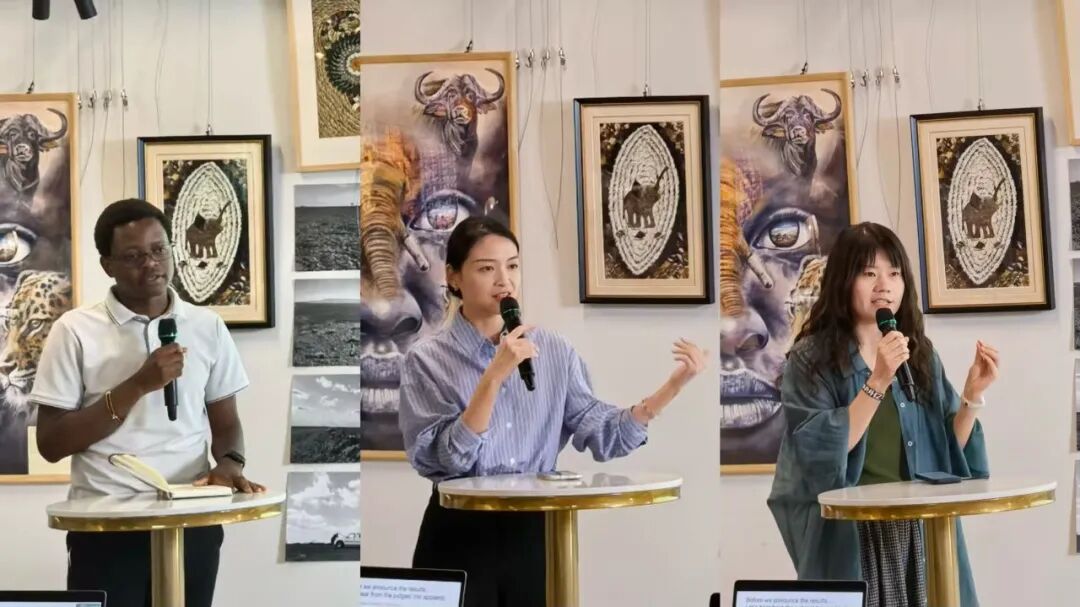
Competition Judges Offering Comments on the Submissions
After the deadline for submission had passed on the 1st of May, 2026, the judging panel consisting of Eric Mupona (Zhejiang University), Lifang Zhang (Tsinghua University), and Kaiyang Xu (China Foreign Affairs University) spent around twenty days reading and evaluating the submitted works intensively and selected nine entries to be awarded. On the day of the ceremony, Kate Qiyu Chen (First Prize in the Fiction Category) and Adaobi Rosemary Ogueli (Honorable Mention) received their award certificates in person, while the other awardees received theirs online, with some delivering remarks via video recordings.
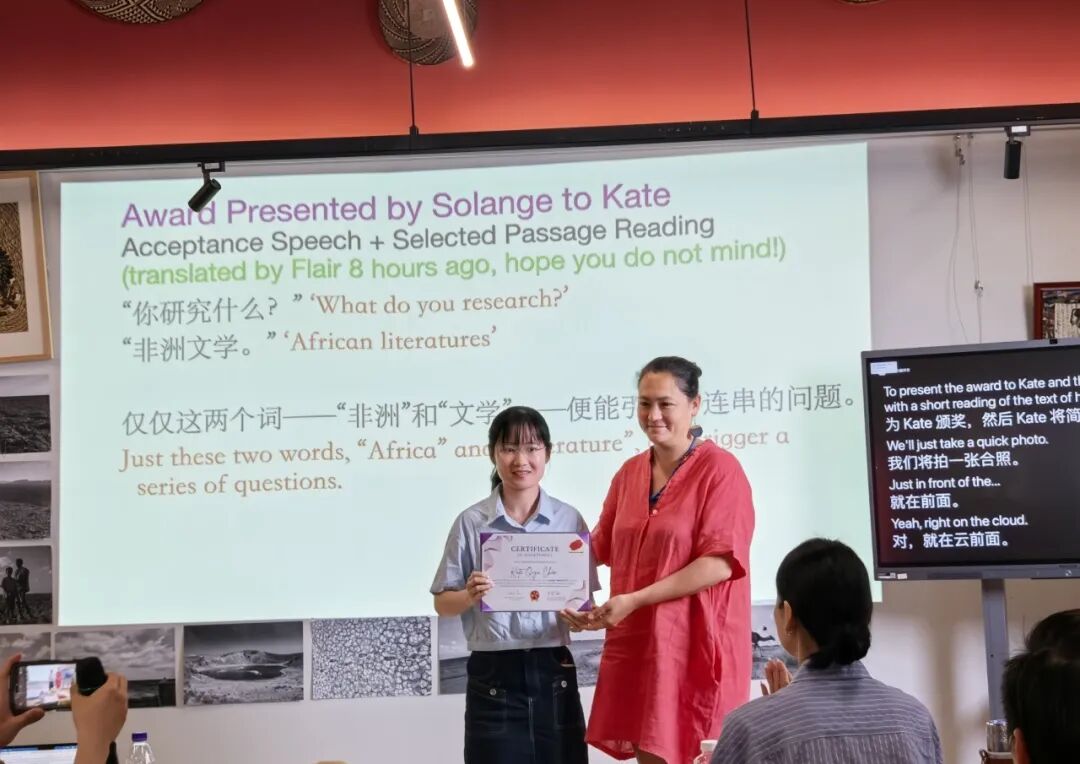
CA/AC Director Solange Guo Presenting the Award to Kate
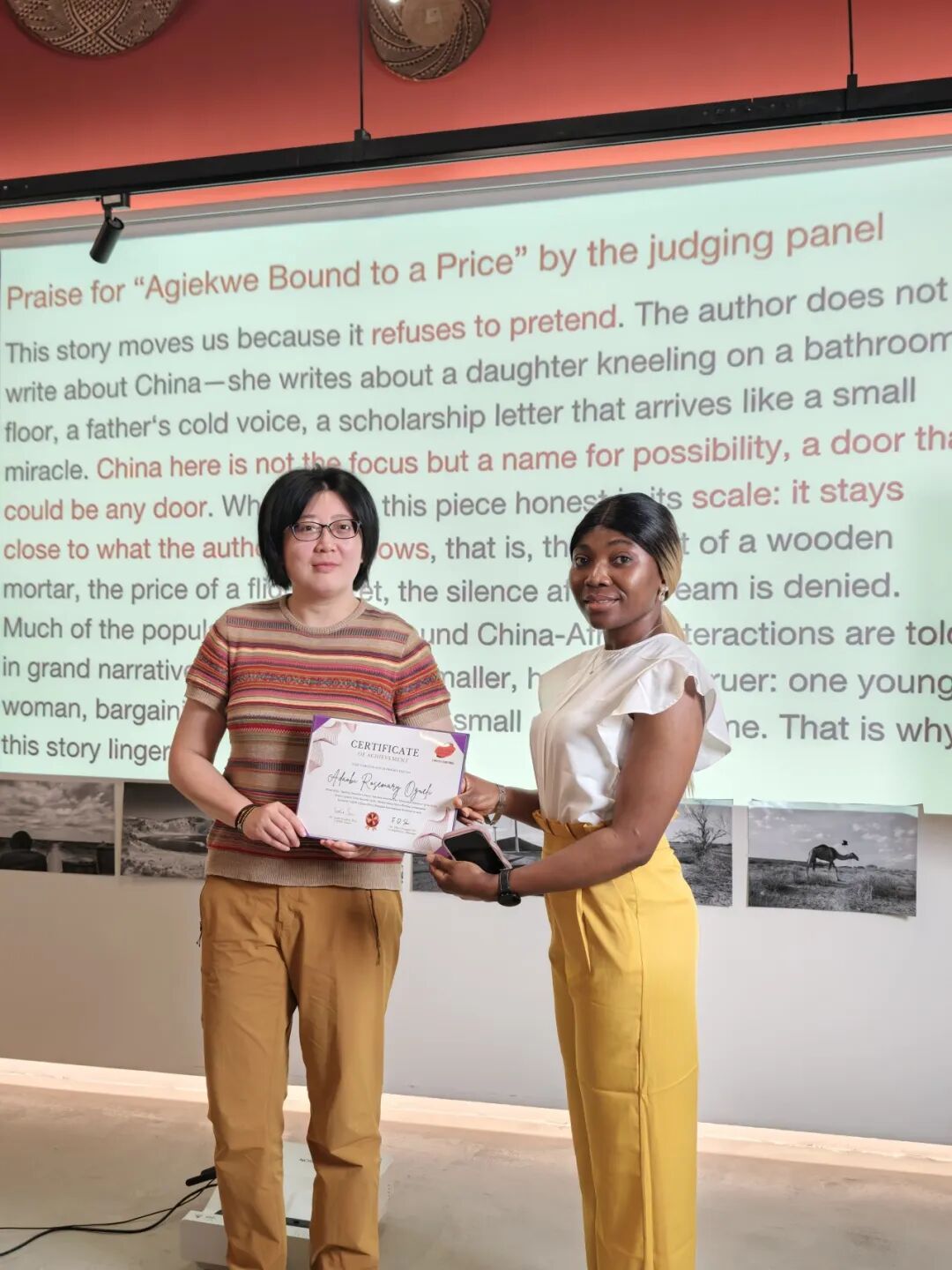
CASIN Director Presenting the Award to Adaobi
Same as the First Competition, the main working languages of the Second Competition were Chinese and English, but works written in other languages would also be considered as long as a Chinese or English translation could be provided (we had not received any such works for this round, and look forward to having creative works written in more diverse languages participate in our effort in the future). The awards this time include one First Prize for fiction (2,000 RMB), one Second Prize for fiction (2,000 RMB), one First Prize for non-fiction (2,000 RMB), one Second Prize for non-fiction (2,000 RMB), and five Honorable Mention prizes.
Starting in July 2026, we will contact various media platforms to help publish the best works written in Chinese, and then repost the full texts via CASIN’s WeChat account. For works written in English, as well as English translations of select Chinese works, we will publish them on The Elephant, our African collaborator, and then repost the full texts and AI-generated audio via our WeChat account. In addition to the awarded pieces, we have selected four additional works with notable features and may publish them after some editing. Please stay tuned.

Award List
First Prize, Non-fiction
《我在美国小镇教非洲文学》
(Teaching African Literature in a Small American Town)
Language: Chinese
Author: Kate Qiyu Chen (USA)
Second Prize, Non-fiction
What Went Wrong in a Chinese-Run House in Chad
Language: English
Author: Aidan Huang (Chad)
First Prize, Fiction
Chopsticks and Chapati
Language: English
Author: Alexa Baker (Kenya)
Second Prize, Fiction
The Song in a Tea Cup
Language: English
Author: Dilman Dila (Uganda)
Honorable Mention, Non-fiction
《广州拼贴》
(Guangzhou Collage)
Language: Chinese
Author: Tingting Wen (Austria)
Honorable Mention, Non-fiction
Baptism by the Atlantic!
Language: English
Author: Xin WANG (Portugal)
Honorable Mention, Fiction
Child of Mao
Language: English
Author: Jude Chudi Opkala (USA)
Honorable Mention, Fiction
《潮线》
(Tideline)
Language: Chinese
Author: Anyanwu [penname] (China)
Honorable Mention, Fiction
Agiekwe Bound to a Price
Language: English
Author: Adaobi Rosemary Ogueli (China)
Notable Works of Excellence (all fiction)
《观山》
(Mountain-watching)
Language: Chinese
Author: Xinhu [penname] (Tanzania)
The Red Earth Beneath Us
Language: English
Author: Sonnie Karanja (Kenya)
The Silk Drum
Language: English
Author: Gboyega Ogundele (Nigeria)
《雨季来临前离开》
(Leaving Before the Rainy Season Comes)
Language: Chinese
Author: Huang HU (Rwanda)
*The country name in parentheses after each name on this list indicates the author's current place of residence, and does not necessarily correspond to their nationality. This notation is adopted in the hope that readers will pay greater attention to the personal agency, geographical mobility, background diversity, and dynamic locality of individuals in China-Africa engagements.
Author Bios and Related Remarks for First and Second Prizes
Kate Qiyu Chen, author of “Teaching African Literature in a Small American Town”,is currently Assistant Professor in Africana Studies at Southern Illinois University Carbondale. She earned her dual-title PhD in Comparative Literature and African Studies from Pennsylvania State University in 2024. Her research interests include modern African literature, 20th-century African American literature, and print culture studies.
Praise by Eric Mupona:
What challenges do Chinese and African scholars face when they try to cross borders and engage each other intellectually? This question sits at the heart of contemporary China-Africa studies, and this essay offers some of the most honest and nuanced answers yet written. This essay situates a Chinese scholar within the global project of African literature studies, drawing on vivid fieldwork observations in East Africa, personal teaching experiences in the U.S., and a clear-eyed understanding of how the politics and structures of knowledge production shape the world's perception of African literature. The author does not merely theorize from a distance; she traces the epistemological violence embedded in how African literature is institutionalized, marginalized, and sometimes misunderstood.
What makes the essay particularly distinctive is its argument that African literature teaching must always be contextually situated (因地制宜): where you teach, to whom, in what language, and within what institutional history, fundamentally changes what African literature means and what it can do. This is not a minor pedagogical point; it is an ethical one, and the author treats it as such. This is essential reading not only for China-Africa studies enthusiasts but for anyone thinking seriously about how African literature travels across borders, who gets to carry it, and what is lost or transformed along the way.
Praise by Kaiyang XU:
“Teaching African Literature in a Small American Town” is impressive for its profound reflections on African world-making and the politics of comparison through personal, everyday experience scarefully sensed. At its core, the piece interrogates the relationship between race and knowledge production. It offers a powerful critique of the identity-based assumptions about who is presumed to “belong” to certain fields of study. At the same time, the discussions of African scholarsare organically woven into the author’s own intellectual journey, demonstrating a very mature comparative imagination and humanistic reflexivity. The essay maintains a restrained, open tone. It consciously resists epistemological policingand racial essentialism while sharply critiquing ethnicized knowledge production. As an Asian scholar trained in area studies and interested in Sino-African interactions, I found this piece deeply relevant and intellectually engaging.
Author Remarks:
Alexa Baker, author of “Chopsticks and Chapati”, is a summa cum laude graduate of Howard University with a B.A. in Interdisciplinary Studies, concentrating in International Affairs, Swahili, and African Studies. She is currently pursuing an M.A. in Diplomacy at the University of Nairobi (expected 2026). A recipient of prestigious awards, including the Rotary International Global Grant and Fulbright-Hays scholarships, Alexa has cultivated a strong IR foundation through internships at the UN and the U.S. Department of State. Fluent in English and Swahili, with proficiency in Spanish, she is passionate about African agency, cross-cultural diplomacy, climate justice, cultural heritage preservation, international education, and multilingualism.
Praise by Lifang Zhang:
“Chopsticks and Chapati” uses twelve portrait and scene sketches to capture the subtle emotions and reciprocal gazes of ordinary people within the bustling, everyday life of Dar es Salaam. It is in these intersecting moments that authentic human connections quietly take shape. The author approaches cross-cultural encounters with warmth, yet refuses easy romanticization. The writing carries weight with a light touch, using delicate strokes to portray those “slow, courageous, and unfinished (缓慢、勇敢而未完成)” stories between people—stories that unfold beneath the grand narratives of globalization.
Praise by Kaiyang Xu:
“Chopsticks and Chapati” presents an impressive storytelling style that combines the qualities of an urban mosaic with a documentary-like sensibility. Without relying on grand geopolitical narratives, the collection succeeds through its close attention to human bonds, fleeting moments, emotional warmth, transnational textures, and the lived atmosphere of the city. Set in contemporary Dar es Salaam as a vivid contact zone, the stories reveal Sino-African urban life as intimate, layered, and deeply lived. The work captures the nuanced experiences and interactions between Chinese migrants and local Tanzanian society with subtlety and care. Particularly moving are the “close-ups” of everyday materials, routines, gestures, and traces, through which the multilingual and multiethnic city emerges as a living space rather than an imagined sign. The characters rarely articulate their feelings directly, yet the emotional undercurrents beneath ordinary encounters reveal themselves naturally and with remarkable restraint.
Author Remarks:
Aidan Huang, author of “What Went Wrong in a Chinese-Run House in Chad”, is a Chinese nonfiction writer and researcher currently based in Central Africa. She is in her early thirties and works primarily in Chad and Cameroon. Her writing grows out of everyday encounters during long-term fieldwork, focusing on trust, conflict, and moral judgment in ordinary social relations rather than formal institutions.
Praise by Lifang Zhang:
“What Went Wrong in a Chinese-Run House in Chad” narrows its lens onto an extraordinarily microcosmic transnational space. The author unravels the minute, everyday frictions thread by thread, drawing readers fully into a predicament thick with tension and anxiety. Rather than adopting any predetermined stance from the outset, the author captures both the fears and hyper-defensiveness of Chinese businesspeople in a foreign land, while also offering deep empathy for the employees and the landlord as they defend their dignity. The language of the piece is honest and restrained, and the author‘s own self-reflection serves as a powerful reminder: in fragile circumstances of survival, all understanding, respect, and trust ultimately stem from the everyday choice to see another person as “a full human being (完整的人)”.
Author Remarks:
This essay is based on a housing experience I had shortly after arriving in Chad. I moved into a house in N’Djamena rented by a Chinese sub-landlord. He was in the prime of his life, far away from home, trying to make his way alone in an unfamiliar country. Facing an unfamiliar language and a complex cultural environment, he often felt helpless, while also placing strong emphasis on efficiency, cost control, and execution. The Chadian landlord and cook were somewhat older. They held relatively respected positions in the local context and placed greater emphasis on respect, trust, and proper procedure. Not long after I settled in, cracks began to appear in the everyday life of the house: the Chadian cook was suspected of stealing, and his wages were delayed. The Chadian landlord cut off the electricity because of disputes over the electricity bill and the meter.
Because I spoke a little French, I was forced into the position of translator and intermediary between the Chinese sub-landlord, the Chadian landlord, and the cook. I tried to ease tensions and explain misunderstandings, while also bearing many contradictions that I could not truly resolve. That period was deeply painful for me, because I could clearly feel that everyone involved had been hurt, yet I did not have enough capacity to help them truly see and hear one another.
Later, I turned this pain into this work of nonfiction. For me, writing is a way of transforming field experiences that are difficult to digest into public material that can be discussed and understood. China-Africa relations do not exist only in narratives about policy, infrastructure, trade, and aid. They also exist in a house, a power cut, a meal, and a sentence about respect.
I am grateful to CASIN for providing this platform. It encourages people working in research and professional settings to pick up the pen, to tell real stories in language that readers can understand, and to convey both ideas and lived emotion. Many complex issues only become tangible, readable, and worthy of broader attention when they return to specific people, situations, and words. I thank the judges for recognizing this essay. I also hope that more writing from China-Africa encounters will emerge in the future, bringing into view the real experiences that often remain caught in the gaps of grand narratives.
Dilman Dila, author of “Song in a Tea Cup”, is a writer and filmmaker from Uganda. His most recent book, Where Rivers Go To Die, was a finalist in the Philip K Dick Awards (2024). His short fiction has been shortlisted for the British Science Fiction Association Awards (2021), and the Nommo Awards for Best Novella (2021, 2022) and the Commonwealth Short Story Prize (2013), among many accolades. He was also nominated for Best First Feature by a Director at the Africa Movie Academy Awards (2014), for The Felistas Fable, while his short film, What Happened in Room 13 (2007), has attracted over eight million views online. He is currently working on his next feature film, a solarpunk set in the near future.
Praise by Eric Mupona:
This creative piece reimagines China-Africa engagement through historical fiction and speculative wonder. Tracing the connection to Zheng He's fifteenth-century voyages, the author envisions a Chinese astronomer journeying from Lamu to Acholi land, leaving behind porcelain, knowledge of star travel, and a song woven indelibly into the oral tradition.Its layered humanism is profound. Anyeri's journey from traumatized autistic outcast to inheritor of an interstellar legacy mirrors the recovery of indigenous wisdom suppressed by colonialism and Christianity: “when our ancestors became Christians, our things were considered satanic.” The quiet subversion of patriarchal inheritance norms is equally deft. Early China-Africa encounters emerge not as transactional episodes but as transformational legacies embedded in local society, waiting centuries to be rediscovered.
Author Remarks:
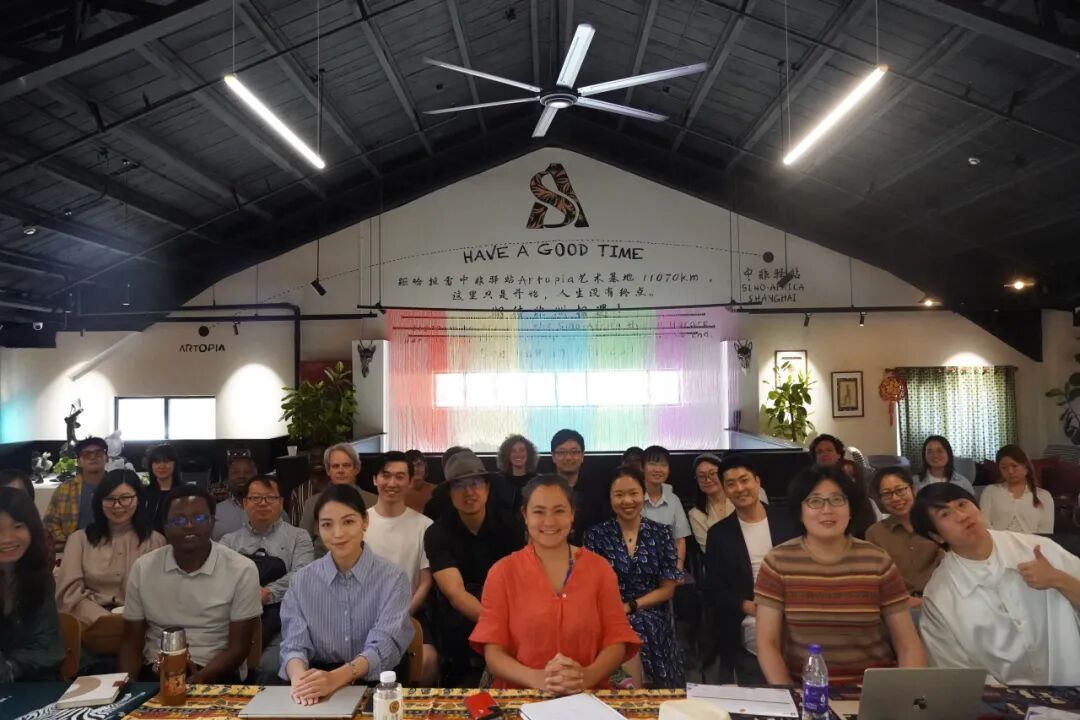
Group Photo at the Award Ceremony
It is our hope that the Global China-Africa Writing Competition will encourage more people involved in China-Africa connections and exchanges to express themselves through literature as a form of public engagement and, in the process, illustrate the specific, complex, yet lively encounters in the development of China-Africa relations. We wish these creative works could help promote cross-regional, cross-linguistic, and cross-cultural understanding and open up more diverse aesthetic spaces for China-Africa cultural exchanges. Looking forward to our reunion in the next round of competition (2027-2028)!
本文首发于 CASIN 微信公众平台。
查看原文 ↗