

Salon Review|Emotions and memories of China-Africa relations
CASIN

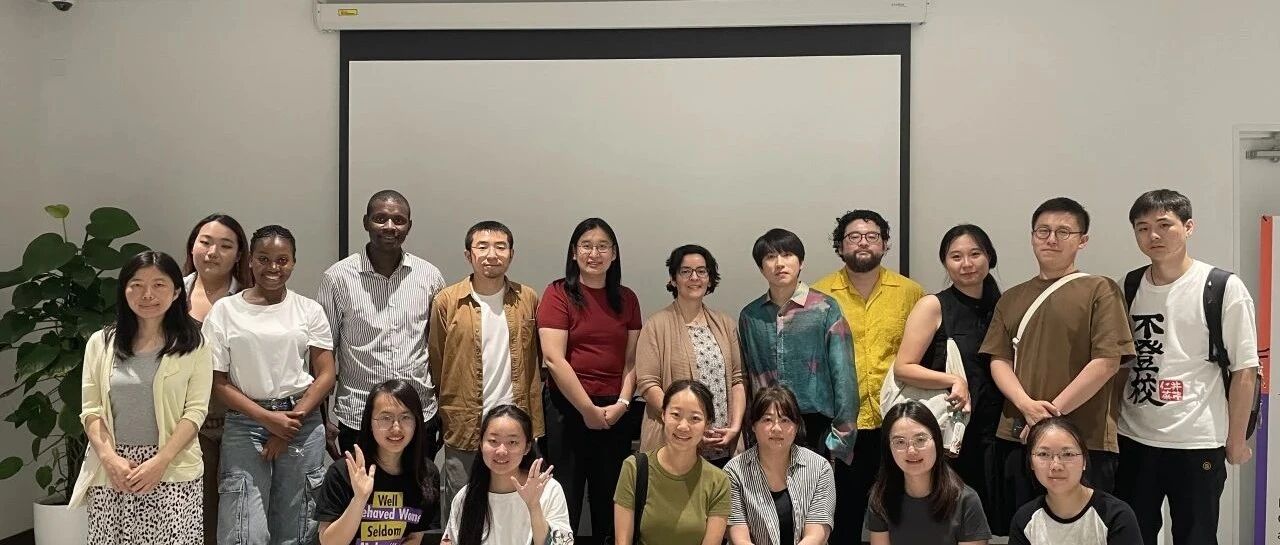
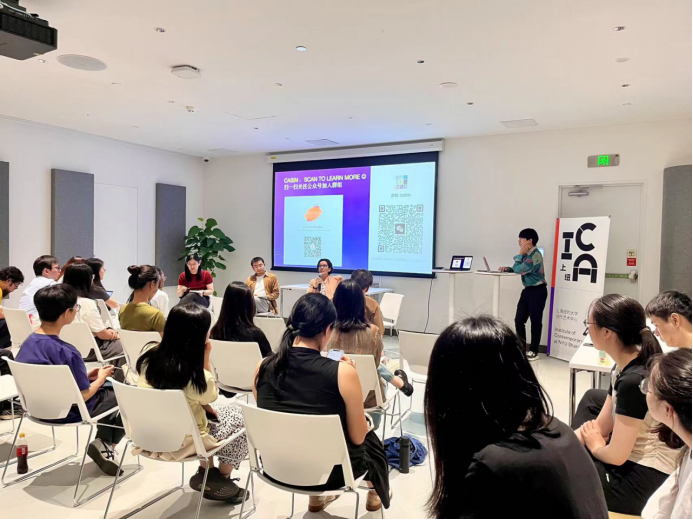
On May 25, 2024, the China-Africa Shanghai International Network (CASIN) held its first China-Africa Cultural Salon this year at the Institute of Contemporary Arts (ICA) at NYU Shanghai. The event, titled "Emotions and Memories in China-Africa Relations," featured guests who explored the emotional threads of China-Africa interactions from various perspectives.
In the opening remarks, Dr. Flair Donglai Shi from the School of Humanities of Shanghai Jiao Tong University introduced the previous events organized by CASIN over the past year and highlighted the ongoing China-Africa Writing Competition.
01
Embodying Afro-Asia: Oriental Song and
Dance Ensemble and the Making
of Affective Bodyscapes
The first talk was presented by Dr. Hao Yucong from NYU Shanghai. She traced the evolution of the Oriental Song and Dance Ensemble from the Bandung era to the 1980s, focusing on how this internationally renowned ethnic dance troupe presented African art. Instead of a grand International Relations perspective on Cold War history, Dr. Hao examined the subtler aspects of body, emotion, and memory, exploring how these African arts shaped Chinese dancers.
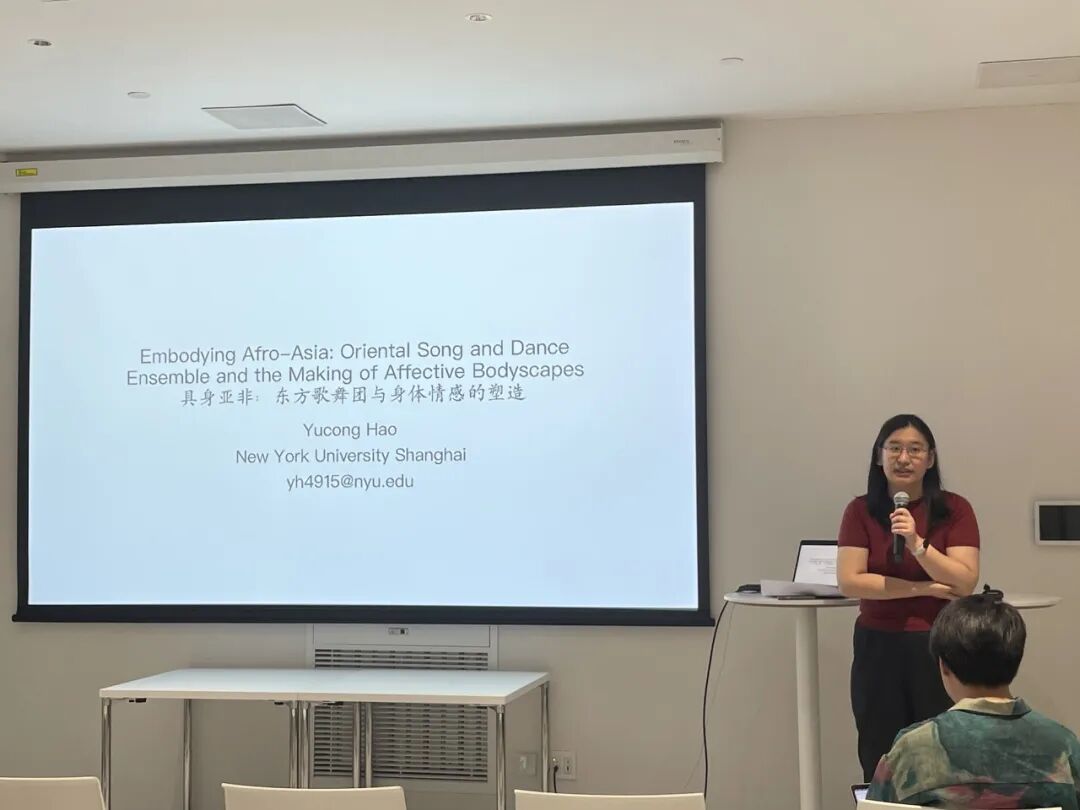
As she pointed out, the Oriental Song and Dance Ensemble was established in 1962 and served as an unparalleled window of New China's cultural diplomacy during the Bandung era. Different from today’s negative understanding, the term "Oriental" in the ensemble's name carried not only geographical but also anti-colonial and anti-imperialist political connotations. The ensemble promoted ethnic dances from China, Asia, Africa, and Latin America, aiming to present the people's art rather than European ballet or modernism. Following Premier Zhou Enlai’s visits to more than a dozen African countries in 1963-64, African arts became increasingly important in China’s cultural diplomacy. The dancers were aware that their performances were part of a political mission, and they needed to cultivate a revolutionary spirit in their daily lives.
For the dancers specializing in Third World arts, Premier Zhou Enlai instructed them to "learn well and learn accurately" to reflect the Bandung spirit of equality and mutual respect. Direct contacts with African artists were rare, so the dancers mainly studied via video tapes. Starting in 1964, as African troupes began visiting China, Chinese dancers had opportunities to learn in guerrilla-style in the so-called “mobile classes”.
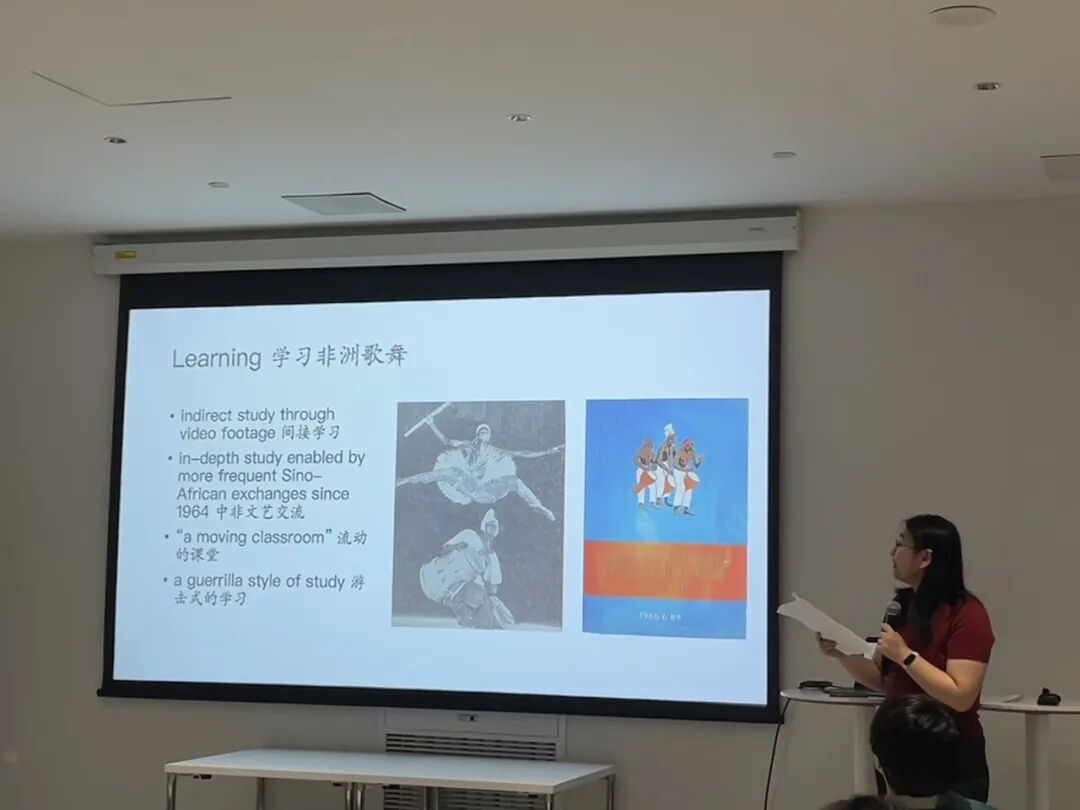
As Dr. Hao explains, to achieve visual authenticity, when dancers learned Ethiopian dances, they had to practice on stilts, wear ethnic costumes, and use special dyes to darken their skin. Some movements in Guinean dances were too passionate for dancers accustomed to Chinese classical dance to learn.
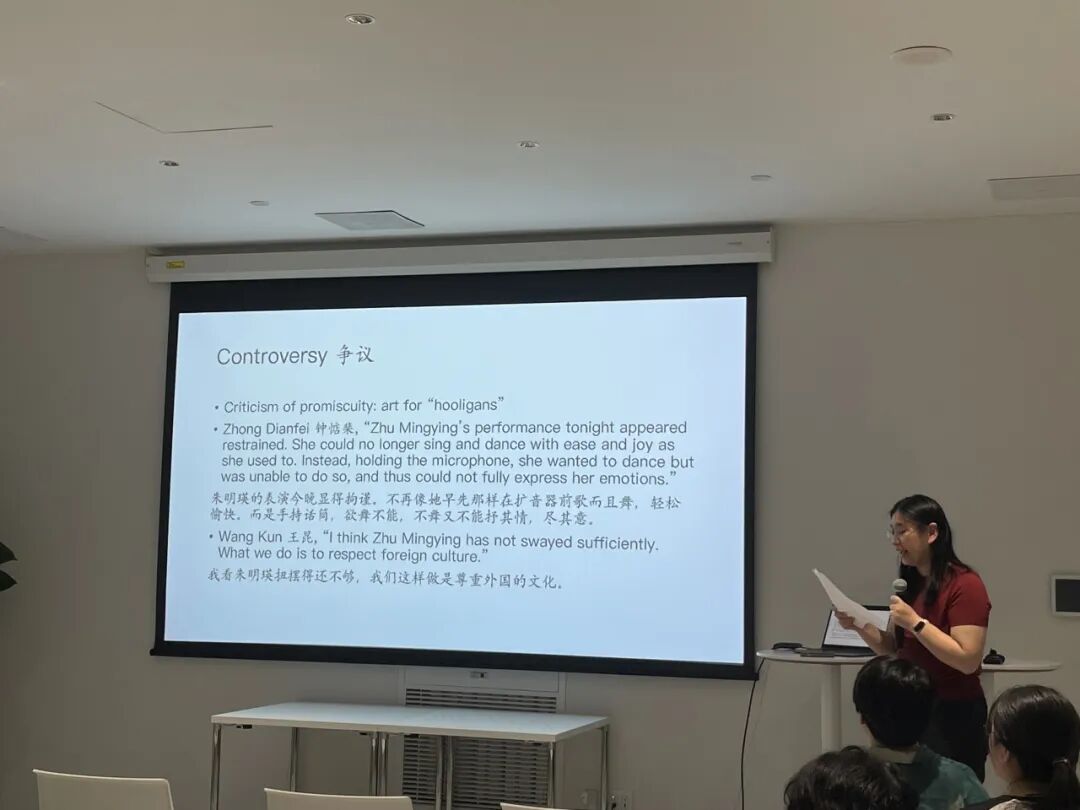
With the advent of the reform and opening-up period, the Oriental Song and Dance Ensemble’s gradually gave up African dances. Pop music from Hong Kong and Taiwan deeply influenced mainland China’s arts, and young singers in the ensemble began to sing folk songs that were closer to life rather than the more passionate revolutionary songs of the past. As an exception, Zhu Mingying continued to perform enthusiastic African dances and imitated the special singing styles of different African countries. However, when performing outside of China, she avoided darkening her skin and tried to prove that Chinese people could also perform African dances. In contrast, at the 1980 Rising Star Concert, which was hailed as the origin of pop music in post-reform China, her performance was more restrained.
02
Emotions and Solidarity in the Global
South: Examining Familiarity,
Resonance and Nostalgia
The second speaker was Professor Lina Benabdallah from Wake Forest University. Professor Benabdallah traced the emotional resonance in China-Africa relations and how this resonance has served diplomatic policies.
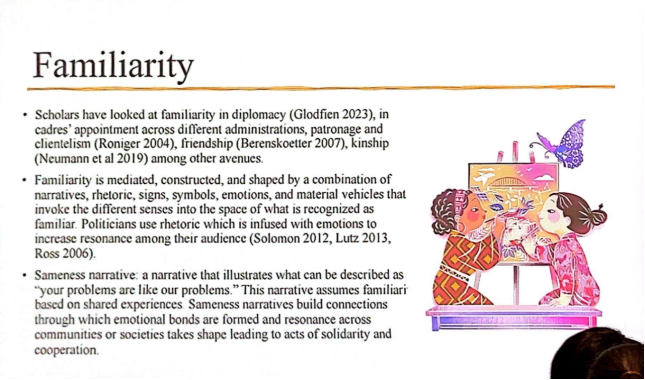
As she stressed, since the Bandung Conference, resonance has frequently appeared in the narratives of China-Africa relations. As the largest developing country and a “fellow sufferer”, China understands Africa's difficulties in development and has always been willing to share its experience. For instance, in 1964, when Chairman Mao Zedong spoke about Congo, he compared Congo's struggles with China's and Vietnam's struggles against American imperialism, emphasizing that the Congolese people were not isolated. Similarly, the 1965 dance drama War Drums on the Equator (Chi Dao Zhan Gu) used bamboo to represent Vietnam and drumbeats to represent Congo, demonstrating how people around the world were opposing American imperialism together. Of course, there might be misunderstandings of Congolese culture in such shows, as the drums were more commonly used in funerals in Congo.
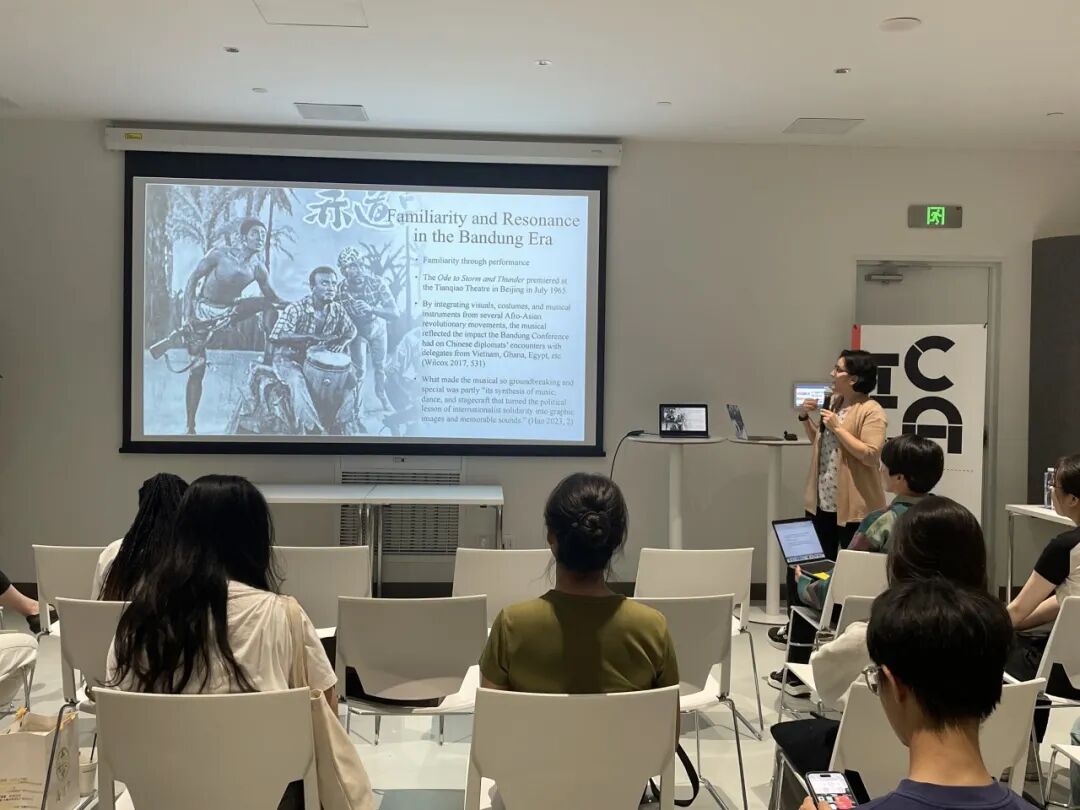
According to Lina, the emotional resonance between China and Africa also needs to be supported by material benefits and practical diplomacy. For example, African countries supported China's return to the United Nations in 1971, China aided the construction of the Tanzania-Zambia Railway in the 1970s, and during the pandemic, China provided medical assistance to Africa.
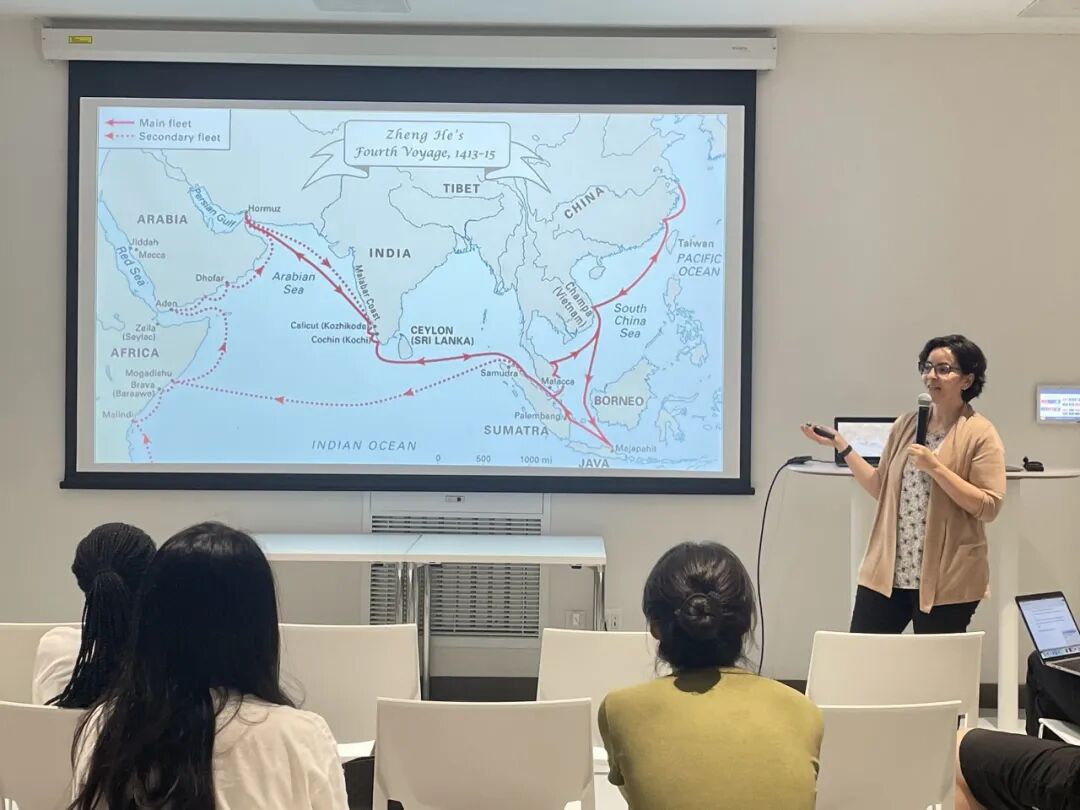
In the current Belt and Road Initiative, the history of Zheng He's voyages to the East African coast has become an important theme in building resonance between China and Africa. At the inauguration ceremony of Kenya's Mombasa Oil Terminal in 2022, China’s Minister of Foreign Affairs Wang Yi traced China-Africa relations back to Zheng He in his speech, emphasizing that China's contact with Africa was not through colonization and conquest. Kenya also collaborates with Chinese experts on archaeological projects along the East African coast to find Chinese shipwrecks and ceramics. These projects have received extensive media coverage locally, though the archaeological results are still limited. Lina also mentioned the novel "The Dragonfly Sea" in which a Kenyan girl tries to trace her ancestors back to the Ming Dynasty (CASIN's China-Africa Writing Competition also recommended this novel). She also showed the audiences a photo of Zheng He, which she took at the Mombasa station of the Mombasa-Nairobi Railway.
03
The Stories in the Stamps:
Local Presentation of
China-constructed Projects
The third speaker was Dr. Liu Ye from Tsinghua University. With a background in architecture, he focused on China's early infrastructural aid to Africa and pointed out that many buildings constructed from such aids can be found on postage stamps.
Dr. Liu first told the story of how China helped the locals build a match factory in Conakry, Guinea in 1964. During the preliminary survey, the Chinese visitors were impressed by the modern architecture in Africa. These buildings demonstrated the style of tropical modernism, which was influenced by colonialism and designed to address temperature and ventilation issues. Other examples included the National Museum of Ghana and the University of Ibadan in Nigeria in the 1950s, both of which had simple sun-shading designs. Dr. Liu also showed many old sun-shading structures he observed during his fieldwork in Africa.
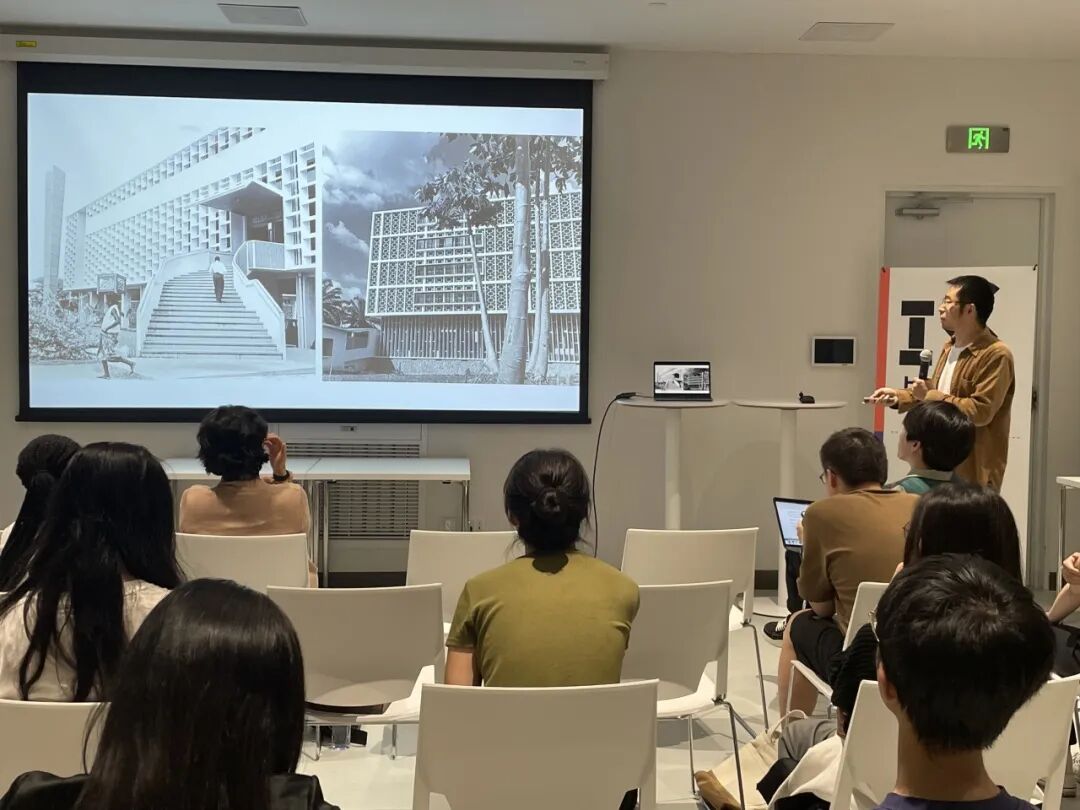
For the match factory in Guinea, when Chinese engineers discussed the plans with the Guinean side, they found that the interior of the building did not suit the exterior’s tropical modernism, making it a malfunctioning project. In 1964, during Premier Zhou Enlai's visit to Guinea, he inspected the match factory and, upon returning to China, emphasized the issue of tropical architecture, which was a challenge to the aid and architectural systems at the time. When Chinese architects tried to use traditional African houses in architectural design, they often found these did not match modern society and had to resort to colonial architectural styles.
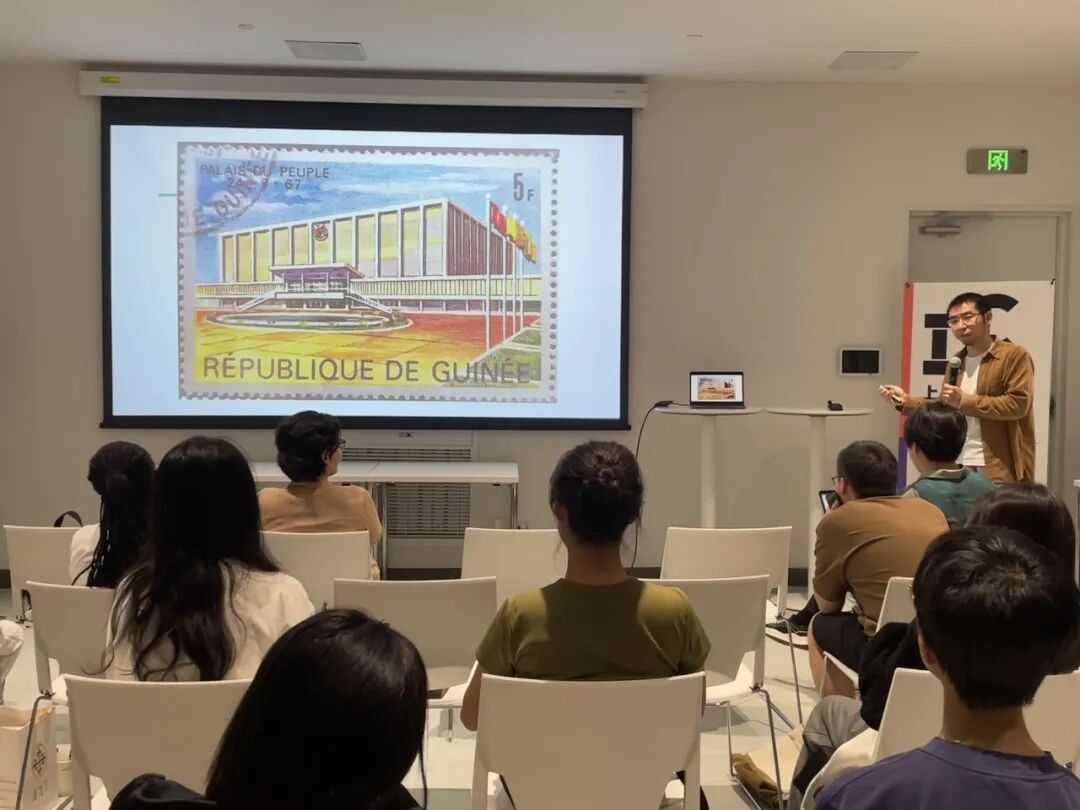
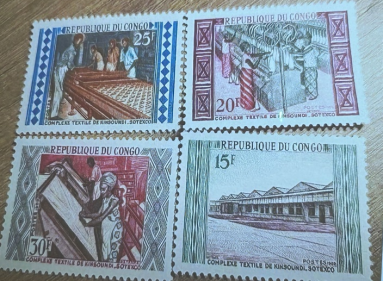
Dr. Liu then displayed three stamps featuring Chinese-aided buildings in Africa. The People's Palace in Conakry, Guinea (built between 1965-1967), was very modernist, a taboo style in China in the 1950s; the Imboulou Hydroelectric Power Station in the Republic of the Congo (1975-1979), rebuilt with Chinese aid in 2007, still provides power today; and the stamp of the Kinsoundi Joint Textile Factory in the Republic of the Congo (1966-1969) depicts workers, but due to neoliberal deindustrialization driven by institutions like the IMF and the impacts of civil war, this textile factory is now abandoned.
Dr. Liu then focused on the Tanzania-China Friendship Textile Cooperation factory completed in 1968, a symbol of Sino-Tanzanian friendship. Since its operation, the factory has generated limited profit but secured the employment and livelihood of many workers. During the privatization process in Tanzania in the 1990s, the factory was in stagnation. China attempted to promote the factory’s marketization, but the local community resisted this transition, leaving the factory nearly abandoned. Due to high production costs, it became more feasible to pay the workers directly instead of maintaining production. Dr. Liu also notes that there are also two stone lions at the factory gate, which would have been seen as “feudal relics” and targets of attack during the Cultural Revolution in China.
04
Q&A
After the three presentations, the Q&A section began.
One audience member asked whether there are records of China-Africa interactions at the individual level, aside from state-led cooperation and solidarity. Dr. Liu Ye mentioned that individuals and the state are not simply binary opposites; under the framework of socialist realism, many personal experiences might be integrated into a political story, with individuals often expressing themselves through the collective. Dr. Hao Yucong added that although the dance troupes were state-owned, the performers had varied personal experiences and were not merely working for the state.
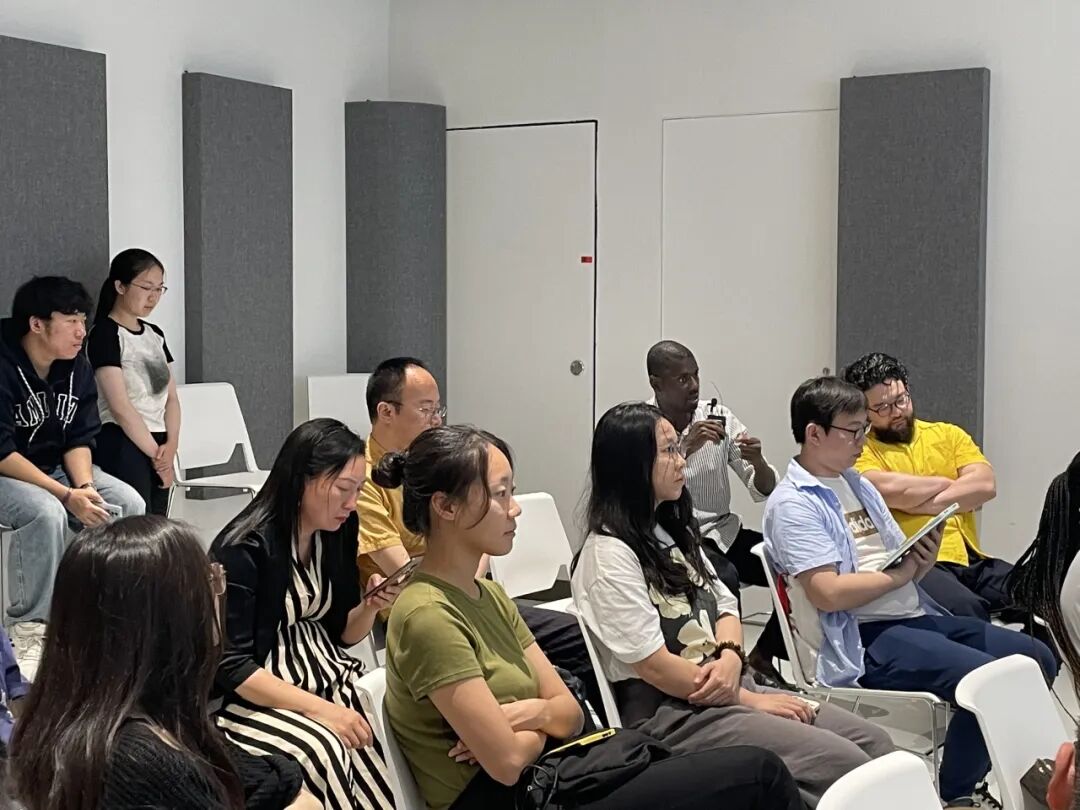
The second question came from an anthropologist researching China-Mongolia relations, who referenced the historical friendliness and cooling of China-Mongolia relations and asked about the complexities behind the continuity of China-Africa friendship narratives. Professor Benabdallah acknowledged that ruptures and contradictions do exist, and continuity often takes the form of nostalgia. Dr. Liu pointed out that we should not deny the value of ideals due to the gap between ideals and reality. Dr. Hao echoed this sentiment but noted that the friendship narrative pertains more to socialism, as a concept like “neoliberal friendship” is full of contradictions indeed.
Regarding the narrative of China-Africa solidarity, the third question from the audience was if there were more expressions from the African side. Dr. Hao discussed the influence of Chinese socialism on African rural reforms and socialist realist literature. Professor Benabdallah cited interviews with Tanzanian and Zambian workers in the research on the Tanzania-Zambia Railway, and they mentioned stories of cooperation and challenges. Dr. Liu shared his field experiences in Tanzania, noting that though he had learnt Swahili beforehand, most technical documents on China-Africa cooperation in local archives were in English, and many project participants were selected for their English proficiency. His research mainly relied on more systematic Chinese materials. Although local voices were somewhat buried under the language barrier, digging from one side could also lead to hearing the other side's voices.
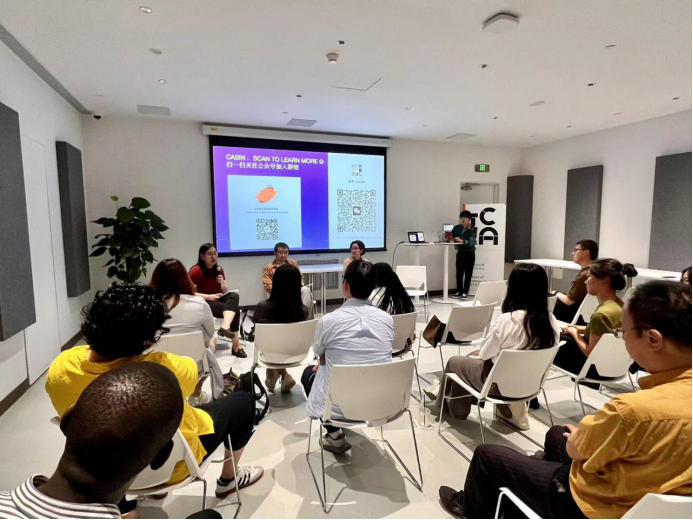
Due to time constraint, multiple questions were collected for the last round of answers. Many audience members mentioned the differences between the 1950-60s aid projects and the current development projects, asking how nostalgia for the past resonates with the new generation. Dr. Liu mentioned that even without going to Africa, people in the 1950s-60s were inspired by the internationalist aid cause when listening to radio programs. However, people are more concerned about businesses and investments today, and similar emotional resonances are hard to achieve. Similarly, Dr. Hao stated that the past utopias cannot be restored, but they can inform ways of thinking for the present.
Flair wondered about the role of Western mediation in China-Africa exchanges, taking the NYU Shanghai space we were in as an illustrative example. Professor Benabdallah noted that many Pan-African conferences between the two world wars were held in Europe, with radical revolutionary ideas formed in Brussels, which showed that Western spaces themselves do not contradict South-South cooperation.
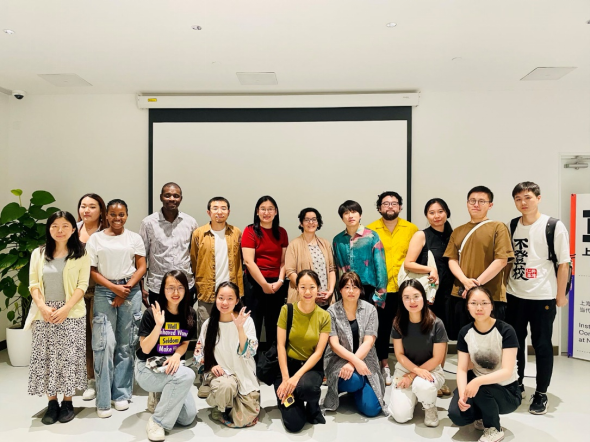
After the engaging Q&A session, the discussion between the audience and the speakers continued in a more casual way. In today’s salon, we explored the emotional connections between China and Africa in the 1950s-60s from the perspectives of song and dance troupes, infrastructural aids, and historical narratives, and examined their evolution to the present day. In future events, CASIN will continue to promote China-Africa exchanges, so please stay tuned! If you have stories to share, please also consider submitting your writings to CASIN’s first China-Africa writing competition. More information can be found in our WeChat Public Account (CASIN).
The First CA/AC Global China-Africa Writing Competition Accepting Submissions till the 1st of October 2024!
(click here)
供稿 |任睿欢
修订 |施东来
编辑 | 肖嘉
本文首发于 CASIN 微信公众平台。
查看原文 ↗